
Lack of clarity on data-sharing persists, public health experts sceptic about the pilot that was run in six Union territories as benchmark for national roll-out

'Demand is wonderful. We have crossed 10 million on many days.' 'The Swedish trade commissioner recently said, "You guys are vaccinating the entire Sweden in one day".'
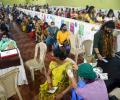
With the maximum dose gap of four months for Covishield, a large part of the population would not even be eligible for the second dose by the end of this year, report Ruchika Chitravanshi and Ishaan Gera.
The government said it had received many representations seeking extension of time citing many difficulties due to the second wave of Covid-19 and the subsequent lockdowns. MCA has asked the registrar of companies to approve the extension of the time limit to hold the AGM.

India was among the top-five economies with the largest general government capital stock level, said, in 2015, an International Monetary Fund report called "Making Public Investment More Efficient". The report fuelled a debate on countries sitting on piles of cash that could be used better. India was believed to have public assets worth $4.5 trillion. The report urged countries to start asset recycling. Six years after the report, Australia's success in asset recycling has turned India into a believer; despite doing averagely in its previous efforts on roads, railways or meeting its divestment targets.
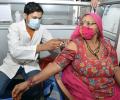
As the rural areas account for more than 40% of the country's population, they need to receive at least 41.7 per cent of the doses to make vaccine administration more equitable, reports Ishaan Gera.

In 2019-20, the capital expenditure of Indian Railways (IR) increased 60 per cent over 2016-17. The draft National Railways plan envisages a further increase in IR's capital expenditure, but an analysis by Business Standard shows that IR has come to depend more on borrowings and budgetary support. In 2016-17, while 11 per cent of its capital expenditure (capex) was funded by internal sources, in 2019-20 the ratio dropped to less than 1 per cent. A 2015 Committee on Restructuring Railways had flagged that over-reliance on borrowings could exacerbate the financial situation of Railways.

The reason for vaccination not doing enough to stave off infection is partly that the rates of the fully vaccinated population are still below 20 per cent in most districts.

It emerges that Vi has probably offered good data quality despite being short on spectrum and infrastructure due to its stretched finances. Did the two companies that merged face the heat due to price wars? Probably. Did the government's tough stance in demanding its "due" share of telecom revenues hurt the company? Certainly!
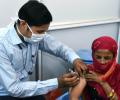
While some experts believe that a large part of India is still vulnerable to the virus that could trigger a third wave, others feel the country is not likely to be engulfed by another deadly wave unless a new variant emerges.

The death of a 11-year-old boy due to 'bird-flu', even before the devastating effects of the second Covid wave have waned, has alarmed the medical fraternity though they assert that human-to-human transmission of H5N1 virus is extremely rare. The event has also put the Rs 90,000 crore domestic poultry industry which was seeing some uptick in demand after months of low sales last year into a spot of bother, as any curb on sale or production of eggs or chicken could have a devastating impact on its revenues. It is estimated that around 60 million people are directly impacted by the poultry sector in India. H5N1 virus, also commonly known as bird flu, is known to spread from chickens but other birds such as ducks and crow are also carriers of the virus.

To give an impetus to 'Digital India', Prime Minister Narendra Modi had in 2015 announced the smart city mission. The primary objective of the government was to develop 100 smart cities within five years. While the first crop of smart cities was to have been ready by later this year, others were to be developed by 2022-23. But India seems to be falling behind on the timeline.

'We have the technical expertise, and international collaborations. We also have robust real-time data. We are a university of pandemic management. If the ministry neglects the role of NCDC, it is the loss of the country'
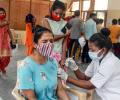
A June 11 survey by cLocalCircles across 299 districts puts overall vaccine hesitancy levels at 18 per cent, with 11 per cent of the respondents saying they were not convinced if the currently available vaccines would protect them against the new strains; and 5 per cent said they do not plan to take the vaccine at all.

865 million Indian adults require vaccination.

Easier dilution norms for mega initial public offerings (IPOs) have come into effect. Companies with post-listing market capitalisation (m-cap) of more than Rs 1 trillion will not be required to dilute a minimum of 10 per cent. The move to relax dilution norms is seen as a precursor to Life Insurance Corporation's IPO. The central government has said companies with an m-cap exceeding Rs 1 trillion will have to dilute Rs 5,000 crore and at least 5 per cent of their m-cap. Experts said the earlier framework discouraged large companies from listing since they were forced to offload a large volume of shares during the time of their IPO.

A number of listed companies are not to be found on their registered address. The stock exchange has also been unable to contact them through other means. These 50 companies had been suspended for violations for more than six months. The BSE had reached out to them with show cause notices in December 2020.
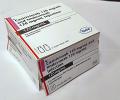
According to medical practitioners, the treatment is especially useful in controlling disease among those who have not received the vaccine or got only one shot and also the high-risk contacts of a patient.
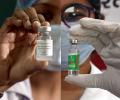
The study by a group of doctors showed that after two shots of the vaccines, 98 per cent recipients of Covishield showed antibody response, while the same was 80 per cent among Covaxin recipients. Sohini Das and Ruchika Chitravanshi report.

States should ensure a weekly positivity rate of less than 5 per cent, vaccination coverage of at least 70 per cent among the vulnerable section, and community ownership of Covid-appropriate behaviour, reports Ruchika Chitravanshi.
 © 2025 Rediff.com - Investor Information - Advertise with us - Disclaimer - Privacy Policy - Sitemap - Feedback - About us - Terms of use - Grievances